Off the Hook
World Cup media analysis has been used to get media off the hook, I'm putting them back on it for failing women's rugby fans
At the beginning of this month, Sport New Zealand released a media analysis of last year's Rugby World Cup. I saw the coverage of it's findings and rolled my eyes. They became lodged so far back in my head it's taken two weeks to see the report clearly. But I'm now ready to tell you what I have taken away from the media analysis of the Women's Rugby World Cup 2025.
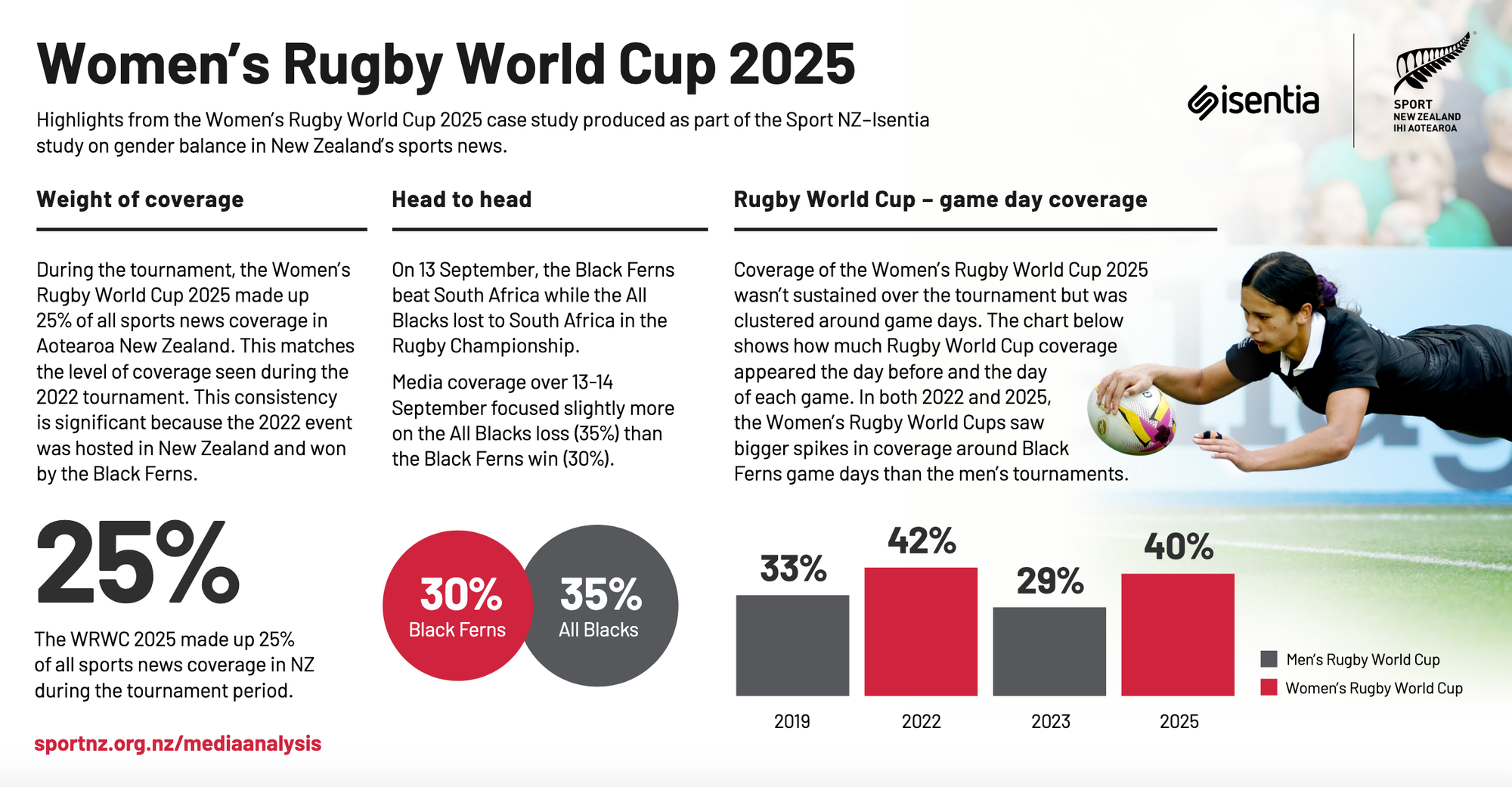
The above was the info-graphic was circulated with the report. The stats included here informed the coverage of it's findings.
Same level of coverage as 2022! More game day coverage than the men's World Cups! Only 5% more coverage for an All Black loss to South Africa than a Black Ferns quarter final win!
The key findings suggested even more wins.
44% of rugby stories during the World Cup covered women! Coverage of women's sports jumped to 42% during this period!
All of these stats allowed our media outlets to take themselves off the hook.
EVERYTHING'S FINE ACTUALLY!
YOU WERE COMPLAINING FOR NOTHING!
WE COVERED IT JUST LOOK AT THESE STATS!
Sorry but I'm calling bullshit.
To paraphrase failed presidential candidate, Kamala Harris, this report exists in the context of all in which it lives and what came before it. Which is to say, this coverage ignores the context in which this coverage is happening.
Let's start with what came before, 2022.
In 2022, the Women's Rugby World Cup received the most coverage we've seen for the 15s game since reporting began. But in 2022, the Women's Rugby World Cup was under covered in relation to it's potential.
This was reflected by the fact that 27.6% of reporting of the 2022 World Cup was about the popularity of the tournament. This was actually the most common theme throughout the event. That this was news meant it was a surprise. That it was a surprise meant we were not prepared.
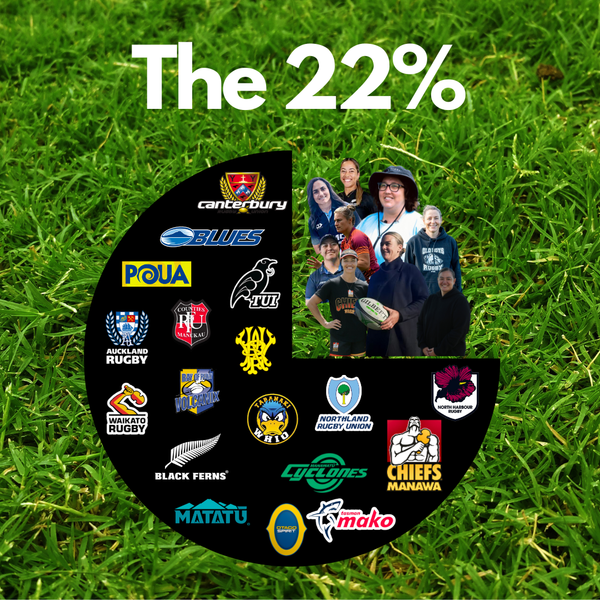
In 2020, women's rugby drew just over 5% of the total rugby stories that year. In 2021, it rose to 7.6% and in 2022, this jumped to just shy of 22%. A record breaking home tournament worth just a 14 point bump in coverage.
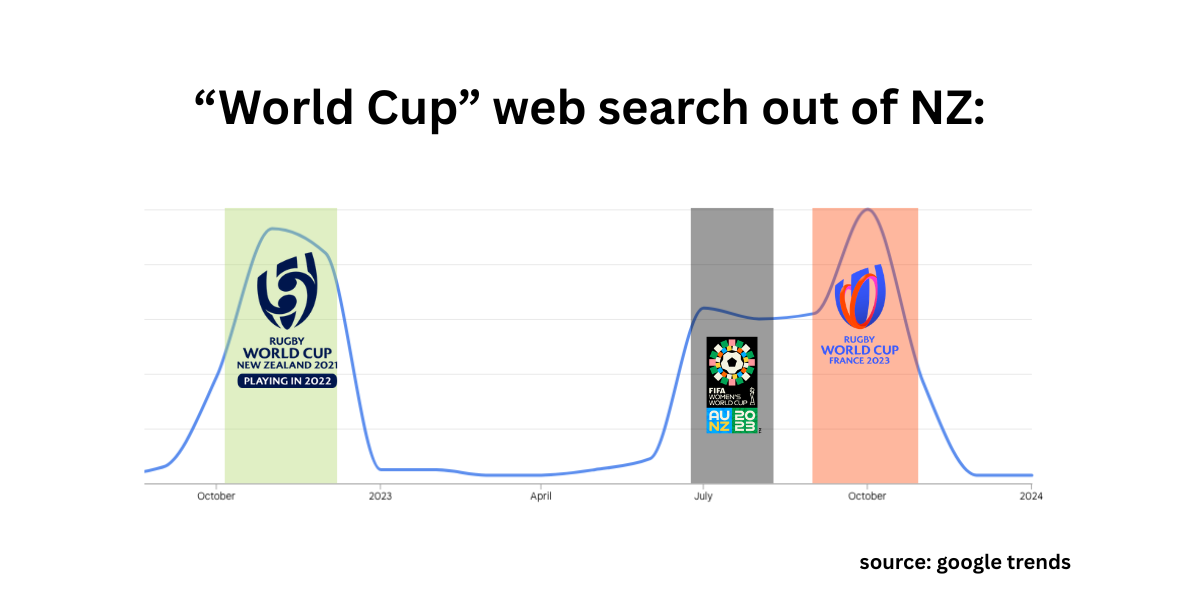
Meanwhile the web search data for "World Cup" out of New Zealand over this period show the audience was there. Despite peaking in searches just behind the men's Rugby World Cup the following year, coverage between the two tournaments simply doesn't compare. Our home tournament gaining 3.9% of the total sports news coverage in 2022 while the men's tournament in France gained 10.5% a year later.
All of this leads me to confidently say the tournament was under covered in 2022 but this is the standard we are now measuring the coverage of 2025. If media meet this benchmark they are given the passing grade.
Sorry but once again, that's bullshit.
Firstly, the notion that we need to congratulate media for not doing worse is hardly aspirational. Secondly, interest in the women's game has hit a new baseline since 2022.
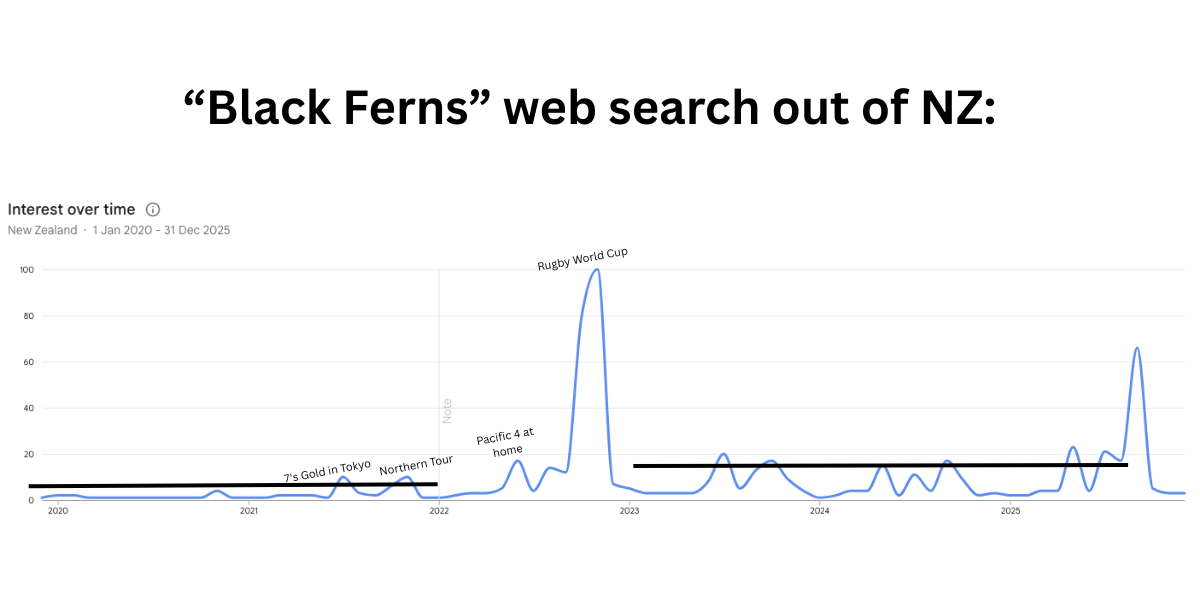
The above is a bit janky but basically, Black Ferns peaked at 6ish ahead of 2022 (in relation to it's popularity peak of 100 during the 2022 Rugby World Cup). Post World Cup this jumped to 17.5. So this just a way of saying the Black Ferns became roughly three times more popular after the World Cup in 2022. With that in mind, we should have seen an increase in coverage of the last World Cup. Instead, the media failed women's rugby fans yet again.
Which is why folks took to social media complaining about the lack of coverage. They were right. There wasn't a sufficient supply to meet their demand.
Fans also picked up on one of the key findings that was noted in this report.
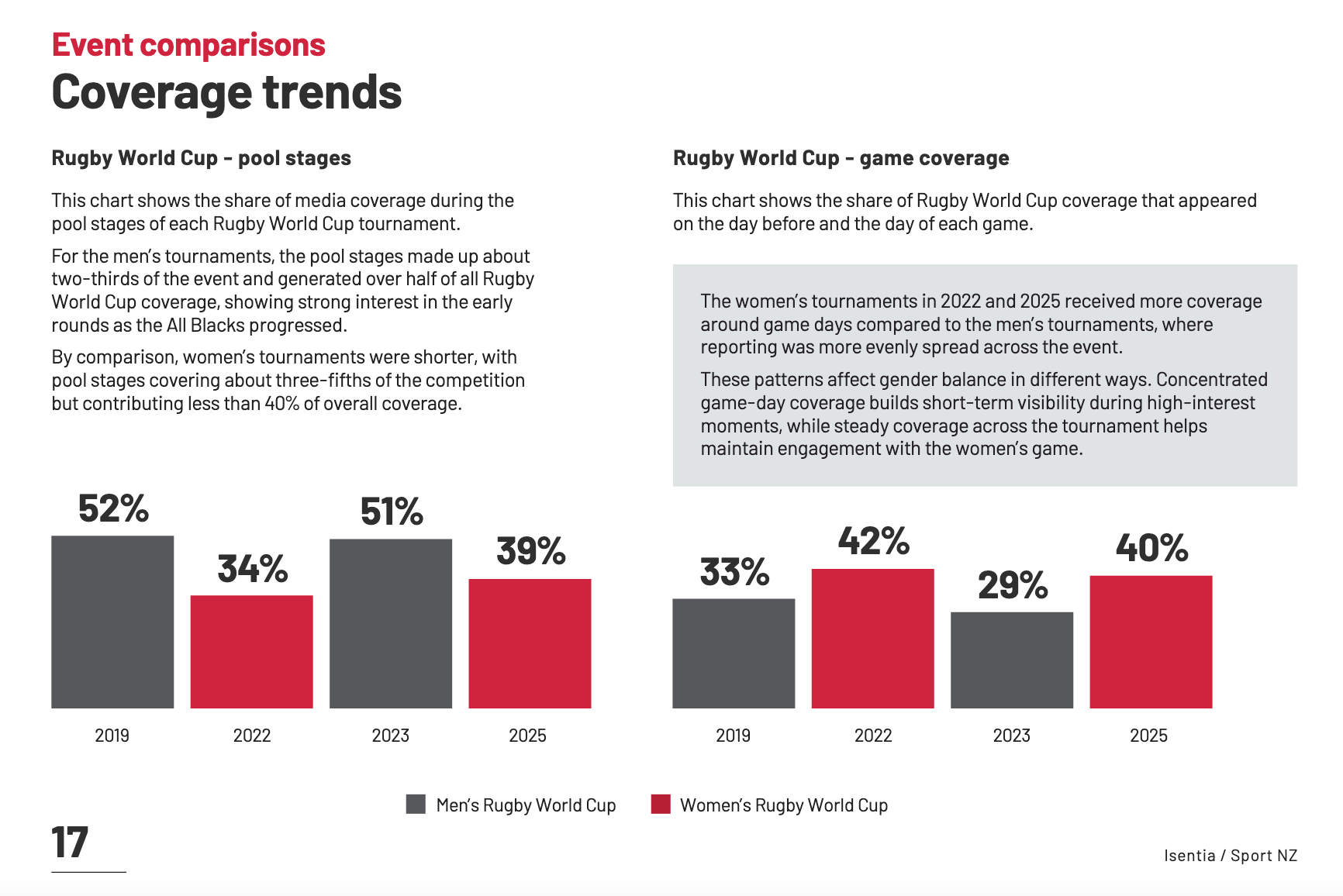
We cover games for women and tournaments for men. Our media do not take fans on a journey alongside our team. They tell you what's about to happen and then what did aka the bare bones of reporting. They don't seed storylines, create tension or raise stakes. They don't give us what we deserve.
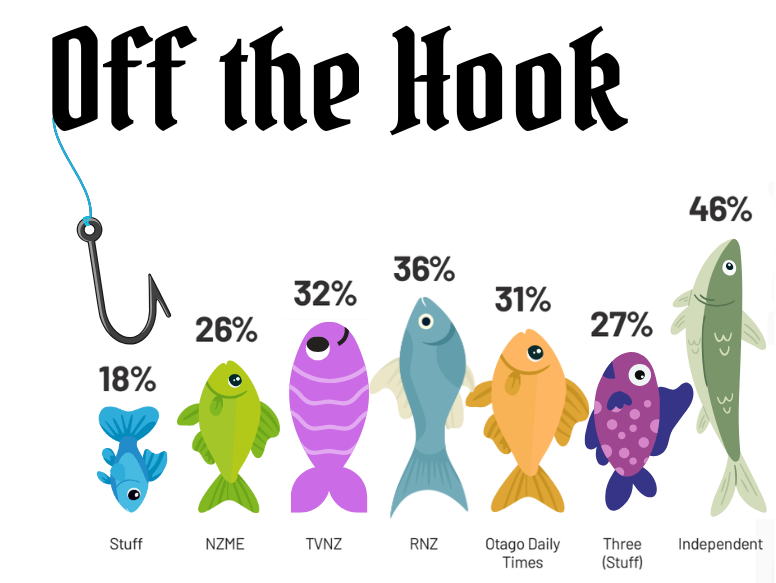
Worse still, those with the biggest media footprint are barely dipping their toe in. The drop off of Stuff, who once had a dedicated women's sports section, in the last 3 years deserves a case study of it's own. I would love to know how many percentage points at NZME I am personally responsible for.
The reality is people are opening up a news browser at work and not finding the story. A good chunk of them are then googling it and like me, no doubt envying the coverage out of England.
All of this is to say, if you thought last year's World Cup was poorly covered, you are right. If you thought it was hard to find stories that gave you proper insight, you are right. If you think the media in Aotearoa can do better for women's rugby, you are right.
If you want to shift that dial, keep seeking it out and supporting those of us that are here trying to provide the coverage we deserve.
With you,
Alice
Start here with by paying for your subscription for this newsletter so I can keep bringing you this coverage.