Putting the community back into sport

It was a year ago that sport minister Mark Mitchell went against the advice of Sport New Zealand to demand the removal of the guidance for transgender participation in community sport. It was yet another example in the growing list of communities that National was willing to sell out to gain access to power.
They had never campaigned on the issue, their members loved to wear rainbows and turn up at pride but when Winston Peters and New Zealand First said jump, National asked whether the height of their hop would be unfair to women given they believed themselves to be the unassailable example of physical prowess.
So this guidance was deleted from the website. The same guidance that was written for and by sporting organisations after a growing need to understand how to run community sport in a safe and inclusive way. Thereby allow community sport to fulfill their commitment to the basic human right of allowing all New Zealanders to play.
Want more like this in your inbox? Subscribe to receive this newsletter each Friday.
Given it was an increase in demand from community sport that lead to the consultation and creation of this guidance in the first place, deleting it did nothing to dampen this need. So last night a new toolkit was launched to meet this demand. Women in Sport Aotearoa (WISPA) in partnership with InsideOut and the Clare Foundation, presented comprehensive and practical guidance to allow sports to meet the needs of their communities.
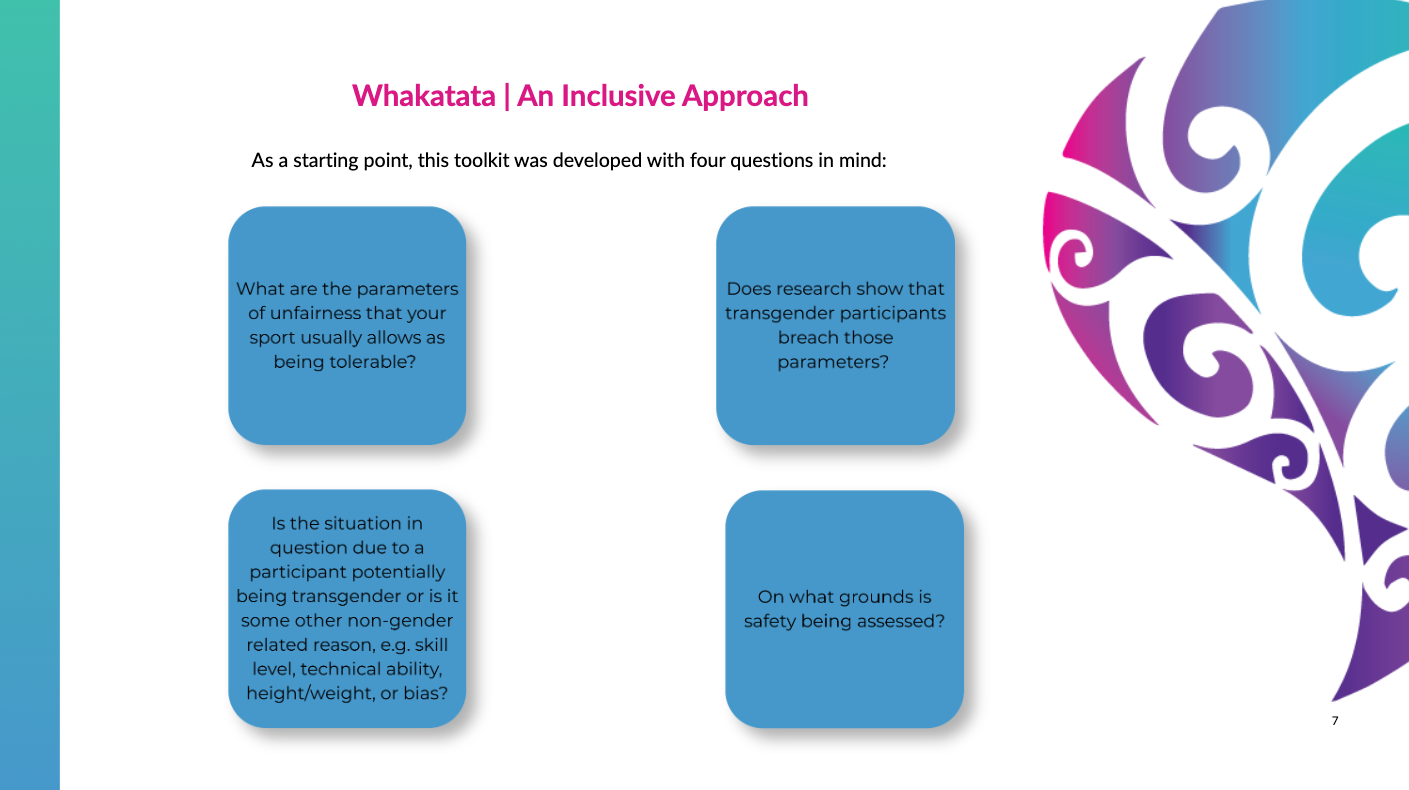
This is great news for those at the grassroots. Who away from the backrooms of coalition negotiation, were left trying to navigate the reality of sport. Trying to find examples of best practice that they could adopt in their codes. The guidance WISPA has assembled puts that together. Giving case studies, prompts and a set of principles to help inform thinking.
The issue with the anti-transgender participation argument is the same as the issues plaguing New Zealand First's definition of woman and man bill. It makes a lot of binary assumptions that just don't hold up to real world examples. It seeks to codify the tackiest of gender stereotypes, creating more harm to all women while claiming to protect them.
The idea that women's sports needs saving from transgender and non-binary participation is utter nonsense. To paraphrase Lila Watson, the liberation of transgender and non-binary participation is bound with the liberation of cisgender women in sport. It is because I advocate for women in sport that I advocate for transgender and non-binary people too.
I've written before about how all ideas have a whakapapa. The roots of transphobia grow from sexism, homophobia and racism. That's why various testing has most frequently punished black and brown women as parameters are set using white women as the benchmark. Transvestigations often target cisgender women who are stronger or faster than sexism believes is possible, who are black or brown, who are queer or heaven forbid, all three!
This harassment has been captured in the research. The report from World Rugby following the monitoring of social media accounts of participants and teams at last year's World Cup, noted that transphobia was in the top three most common forms of abuse during this tournament. Although it is not stated implicitly, I know enough about the tournament to know which player was receiving the bulk of that abuse. Someone like me, a cisgender lesbian who has the audacity of self confidence and a short haircut.
Where was the crowd of those who claim to wish to save women's sports then? Where were the keyboard warriors in the comment section to defend this cisgender woman? Where was the press release supporting this cisgender woman and condemning the abuse?
Nowhere of course. That's left to those of us who are in the game not just playing political ones.
All of this is why it's so important that this toolkit has come from Women in Sport Aotearoa. That is an organisation run for and by women that is leading the conversation, knowing that our future and our safety are intertwined with our transgender and non-binary whānau.
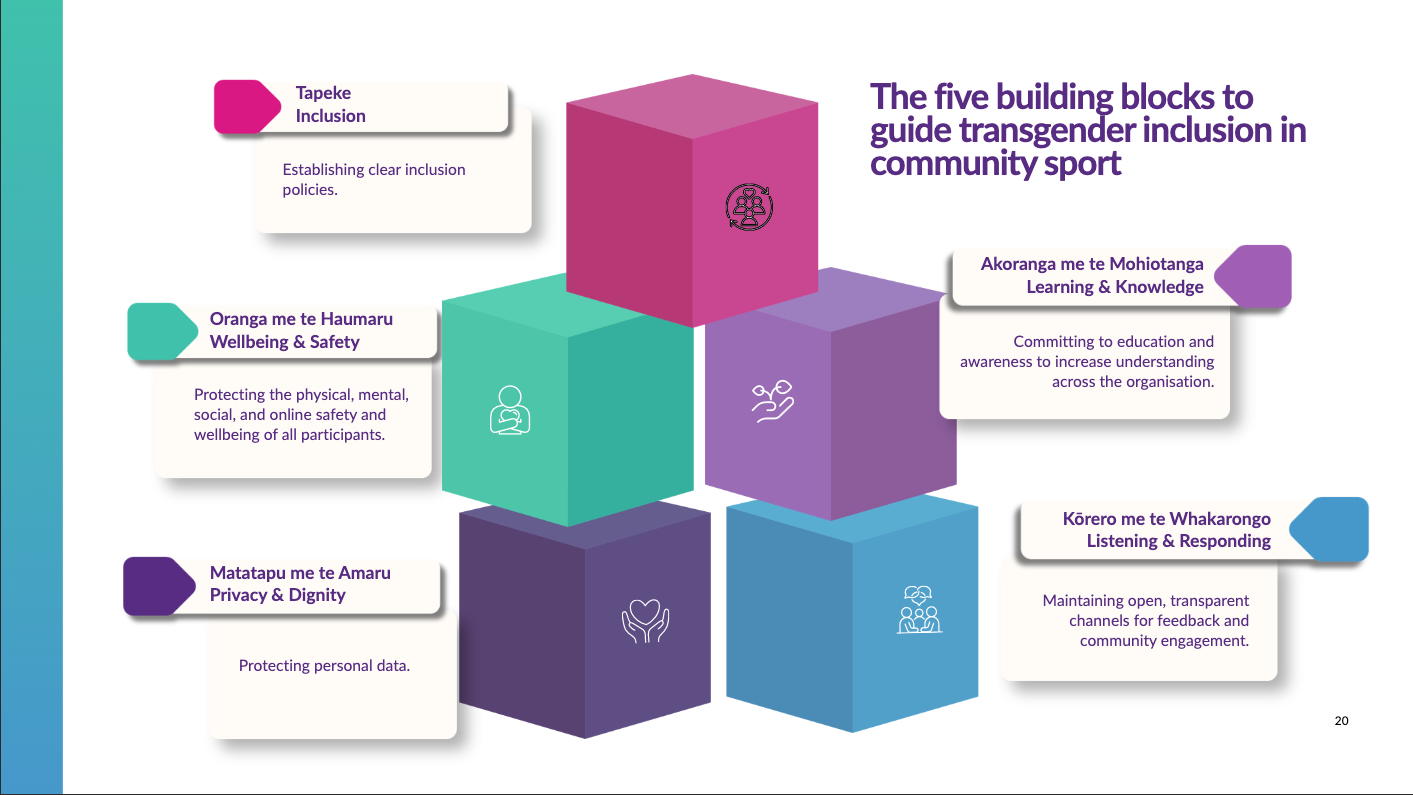
Back to the toolkit itself, the key principles are not dissimilar for the guidance that was deleted by the Sports Minister last year. Despite all the fearmongering, there is nothing there that is offensive to the essence of community sport.
When you take the pot off the boil of identity politics, you're left with what sport has always done. Setting the parameters of play to enable people to physically express themselves in healthy competition with one another.
This is underlined by the important takeaway from this toolkit in bold on page 18, "Trans inclusion is ongoing, relational work rather than a checklist to complete". That is true of all community sport that must remember that at it's core, it's a relational not a physical exercise. When we run our sport on that basis, we realise their superpower and are all made stronger for it.
So thank you to our transgender and non-binary participants for helping community sport reconnect with it's purpose. Forcing a reckoning on inclusion and making old athletes like me, more safe in the process.
With you,
Alice
This newsletter is a reader funded publication. To keep me writing, consider chipping in :)